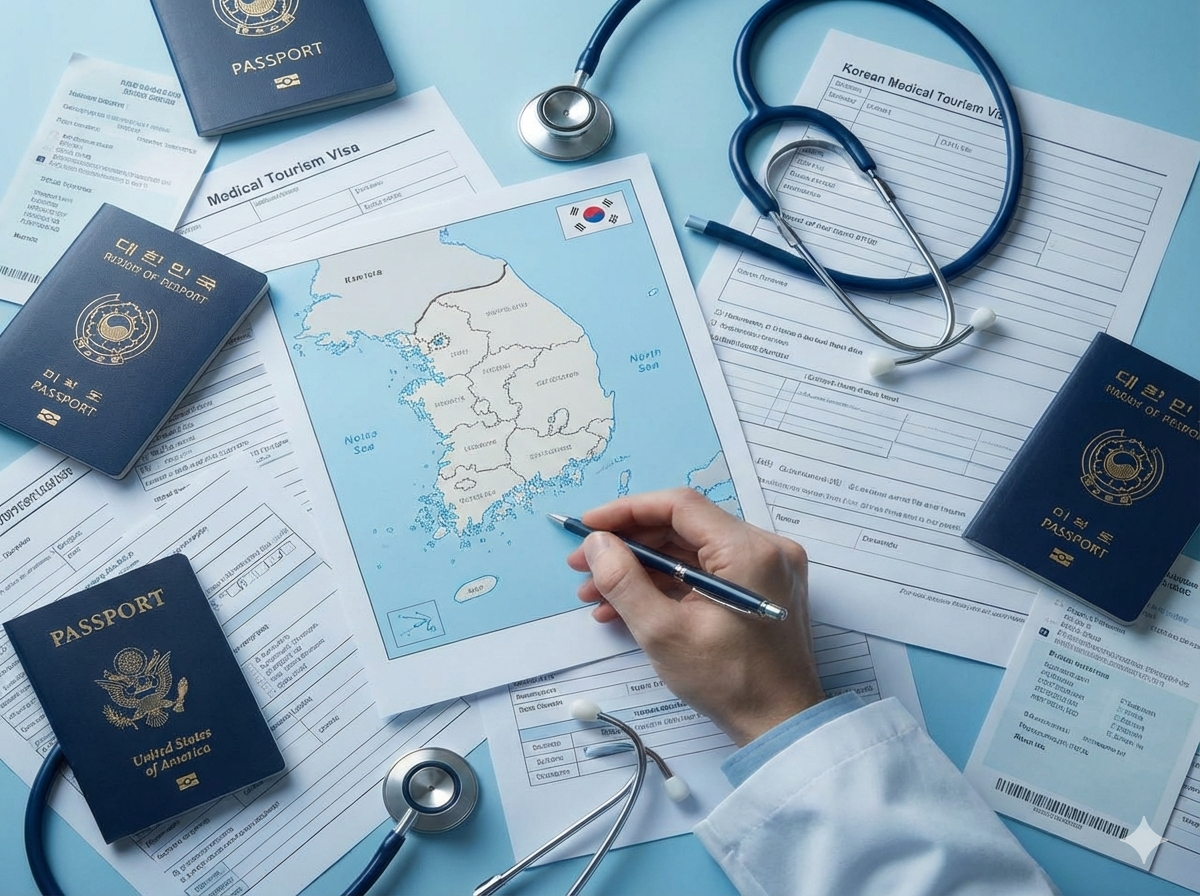
A Simple Guide for Foreign Patients (K-ETA, Medical Visa, Documents, Timelines)
For many foreign patients, the biggest question comes before treatment plans and costs:
“Do I need a medical tourism visa for Korea — and is the process complicated?”
In most cases, the answer is: it’s manageable when you know which path applies to you.
The confusion usually comes from two things:
- Korea has more than one entry/visa route (visa-free/K-ETA vs medical visa)
- Requirements vary by nationality, length of stay, and treatment type
This guide breaks down the process in a simple, patient-friendly way — including what documents are typically needed, how long it takes, and when concierge support (like KareTrip) makes it easier.
First: Do You Actually Need a “Medical Tourism Visa”?
Not always.
Foreign patients usually enter Korea for medical care through one of these routes:
1) Short-term entry (Visa-free / K-ETA route)
Many patients coming for short stays and outpatient procedures can use standard short-term entry rules depending on nationality.
Best for:
- Dermatology / skin treatments
- Minor aesthetic procedures
- Health checkups
- Short recovery stays
2) Medical visa route (when treatment is longer, more complex, or needs official medical documentation)
Some patients need an actual medical visa — especially when:
- The stay is longer
- The procedure is major surgery
- The patient needs a formal hospital invitation / documentation for entry
- The patient’s nationality requires a visa for Korea regardless of purpose
Best for:
- Major surgery + longer recovery
- Inpatient treatment
- Treatments requiring structured medical scheduling over weeks
Key point: The “right path” is mostly determined by nationality + length of stay + type of treatment.
Why Patients Feel the Visa Process Is Complicated
Most patients don’t struggle because forms are hard. They struggle because they’re unsure:
- Which visa category applies to them
- What counts as “medical tourism” vs general travel
- Whether clinic documents must be issued in a certain format
- What to do if the itinerary changes (extra follow-ups, delayed recovery, etc.)
- How to align visa timing with consultation dates and deposits
So the process feels risky — not because it’s impossible, but because mistakes can delay travel.
What Documents Are Typically Needed (General Checklist)
Requirements vary by country/embassy, but foreign patients are commonly asked for:
Basic identity & travel
- Passport
- Application form (if visa required)
- Photo
- Travel itinerary (sometimes)
Medical-related proof (often the most important part)
- Appointment confirmation / treatment plan
- Hospital or clinic invitation letter (when needed)
- Cost estimate (sometimes itemized)
- Proof of payment or deposit (sometimes requested)
Financial & stay proof
- Proof of funds (bank statement, sponsor letter)
- Accommodation info
- Return flight reservation (sometimes requested)
Important: Not all clinics provide international patient documents in a way that matches embassy expectations — and that’s where delays often happen.
Typical Timeline: How Early Should You Start?
A practical planning rule many experienced patients follow:
- Start preparing 3–6 weeks before travel
- Earlier if:
- You’re applying through an embassy/consulate
- Your treatment schedule is complex
- You need companion/family documents too
Even when approval is fast, the risk is usually missing documents or format issues, not processing speed alone.
Common Mistakes That Cause Delays
- Booking flights before confirming visa route
- Clinic documents don’t match what immigration/embassy expects
- Underestimating recovery stay (needing longer time than planned)
- Not planning for companions (family member entry requirements)
- Using unofficial brokers who provide unclear or inaccurate guidance
Where KareTrip Fits In
Patients often come to KareTrip after they realize:
- They don’t want to guess the visa path
- They need documents prepared correctly the first time
- Their plan includes surgery + recovery + follow-ups, not a quick visit
KareTrip supports international patients by:
- Clarifying the right entry/visa route based on the patient’s plan
- Coordinating with verified clinics to prepare medical documents (invitation letters, appointment confirmations, cost estimates)
- Designing a timeline that aligns visa steps with treatment, recovery, and travel
- Supporting communication so patients don’t get stuck between clinic vs embassy requirements
- Managing complexity for patients traveling with family or requiring privacy-focused scheduling (especially common for Middle East patients)
KareTrip’s role is not to “push treatment.”
It’s to reduce uncertainty and ensure the medical journey is planned responsibly — including entry preparation.
FAQ
Do I need a special medical tourism visa for Korea?
Not always. Many patients enter through standard short-term routes depending on nationality and length of stay. A medical visa may be needed for longer stays, major treatment, or if your nationality requires a visa regardless of purpose.
What documents do I need for a medical trip to Korea?
Common documents include passport, application (if visa required), appointment confirmation, clinic invitation letter (if needed), cost estimate, proof of funds, and accommodation/flight details. Exact requirements vary by country.
How early should I apply?
A safe planning window is 3–6 weeks before travel, earlier if treatment is complex or you need embassy processing.
Why do applications get delayed?
Most delays happen due to missing documents, incorrect document formats, unclear treatment plans, or mismatched timelines between flights and follow-up care.
Final Thoughts
Is the medical tourism visa for Korea complicated?
It can feel complicated when you don’t know which entry route applies — and when you’re trying to coordinate medical documents, schedules, and recovery planning alone.
But with the right structure, it becomes straightforward:
visa route → clinic documents → timeline → treatment + recovery plan → travel
If you want clarity before you book flights or commit to clinic schedules, that’s exactly where KareTrip helps most.